In short: Customer service is often the first to know what frustrates customers, but those insights rarely reach the wider business in a form teams can act on. When calls, chats, emails and surveys are analyzed together, customer service insights can become a foundation for decisions across Product, Marketing and leadership.
Customer insights from customer service: how to move from measurement to decisions
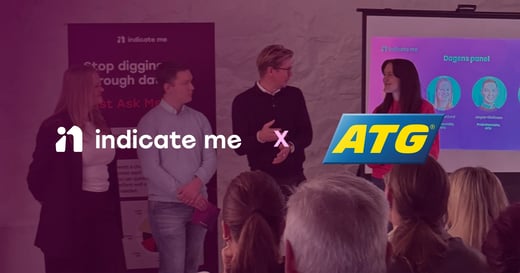
On 24 September, together with Kontakta, we hosted a breakfast seminar with ATG on stage to discuss exactly that. How do you move from operational follow-up to strategic work driven by what customers actually say? Here is what we took away, and what you can apply in your own organization.
Why insights get stuck in customer service
For almost a decade, we have argued that insights from customer service belong on the leadership agenda. The point is not only to raise the status of customer service. It is that customer service holds knowledge the rest of the organization rarely gets to see.
For a long time, the tools didn't allow for much more. Customer surveys and manual case tagging produced a number, but rarely the reason behind it. What does a CSAT of 78 versus 82 across two case types actually tell you? To the team working with it every day, quite a lot. To a product manager, almost nothing.
Today, every customer conversation can be analyzed, not just a sample. AI categorisation identifies the contact reason in each case. With Indicate me features like Ask Me, teams can ask follow-up questions of the results until the root cause becomes clear. And because conversations can be translated into a common language, everyone in a Nordic organization works from the same insights, whichever country they sit in.
Three traps that keep teams stuck in measurement
Many organizations have a strategic ambition but remain stuck in operational reporting. Three patterns come up again and again.
1. The metrics jungle
Average handling time, service level, response time and NPS are easy to track and compare. But they don't show the full picture, and at worst they drive the wrong behavior. Push too hard on AHT without understanding the root cause, and you often see more repeat calls and lower first contact resolution.
2. The report factory
Requests come in, reports go out. It looks like progress, but when a metric moves, nobody knows which lever caused it. Customer service becomes a reporting function instead of a strategic contributor.
"We use a great many different systems. Being able to pull data from everything—without having to request reports from different systems—is incredibly valuable to us." – Albin Winberg, Head of Customer Service, ATG
3. Voice of the Customer without authority
The organization listens, summarizes themes and makes recommendations, but nobody owns the change. Saying "we listen to our customers" means little if nothing happens afterwards.
From measurement to decisions in three steps
Organizations that get real value from customer insights have the whole chain in place:
- The right foundation. Calls, chat, email, surveys and bots are brought together, so everyone works from the same view of what customers are saying.
- Intelligence. Contact reasons, sentiment and patterns are identified automatically, and teams can dig deeper into why something is happening.
- Decisions. Customer Service, CX, Product, Marketing and leadership each get insights relevant to their role, built on the same understanding.
What it looks like in practice
Every day, PostNord's customer service center in Västerås handles thousands of cases. With the AI tool, onboarding time has dropped from six months to just a few weeks, customer satisfaction has increased by 10% in 2024, and 85% of all call logging and summaries now happen automatically.
Read the PostNord case to see how that work was built in practice.
Four questions to start with in your own organization
- Which contact reasons come back month after month?
- Who in Product, Marketing or Finance should be seeing them?
- Which metric or report could you stop producing?
- Which decisions are made on gut feeling today that customers should be informing?
What does it cost not to act?
Our conversations with customers are not only about ROI. Just as important is COI, the cost of inaction. This is the cost of letting the same problems recur month after month without anyone addressing them.
Summary
Insight drives change, not more reports. The customers of ours who win awards for best customer service combine operational and strategic work with customer insights. The most important step is deciding who owns turning an insight into a change, not just another slide.
“We’ve discussed how our customer insights can help develop products and everything we do across the board. Hopefully, both customers and employees will be happier as we find small tweaks that make everything a notch better.” – Sara Granlund, Product Specialist, ATG
Want to see how your customer conversations can become a foundation for decisions?
Book a conversation with us and we’ll show you how customer service and AI can support better decisions across your organization.